Dry Eyes & Blepharitis
Why Your Eyes Feel Dry, Gritty, Watery or Tired
Dry eye is one of the most common eye conditions I see in my clinic. It can cause dryness, grittiness, burning, watering, redness, tired eyes and fluctuating blurred vision.
Despite the name, dry eye does not always mean that the eye is simply “too dry”. In many patients, the problem is that the tear film is unstable, evaporates too quickly, or becomes inflamed — often because of blepharitis or meibomian gland dysfunction.
The good news is that dry eye and blepharitis can usually be improved, but they often require a consistent treatment routine rather than a one-off cure.
Quick summary
Dry eye is usually due to poor tear film quality, not just low tear volume
Blepharitis and meibomian gland dysfunction are very common causes
Symptoms may include dryness, grittiness, burning, watering, redness or blurred vision
Air-conditioning, screen use and reduced blinking often make symptoms worse
Treatment usually involves a combination of environmental changes, lid care, lubricants and sometimes prescription treatment
Improvement often takes weeks rather than days
What is dry eye?
The front surface of the eye is covered by a thin layer of tears called the tear film. This tear film does much more than keep the eye wet. It helps:
protect the surface of the eye
wash away irritants
reduce the risk of infection
keep vision clear by creating a smooth optical surface
Dry eye occurs when the tear film is not working properly. This may be because:
the eyes do not produce enough watery tears
the tears evaporate too quickly
the oil layer of the tear film is poor quality
the surface of the eye becomes inflamed
Many patients have a mixture of these problems.
Why do dry eyes sometimes water?
This is one of the most common questions patients ask. It seems strange, but watery eyes can be a symptom of dry eye.
When the eye surface becomes dry or irritated, it sends a signal to produce extra tears. These are often “reflex tears” — watery tears produced in response to irritation. They may run down the face, but they do not necessarily stay on the eye long enough to lubricate it properly.
In other words:
- The eye may be watering because the tear film is unstable, not because the eye is well lubricated.
This is especially common when the oil layer of the tear film is poor.
The tear film: oil, water and mucus
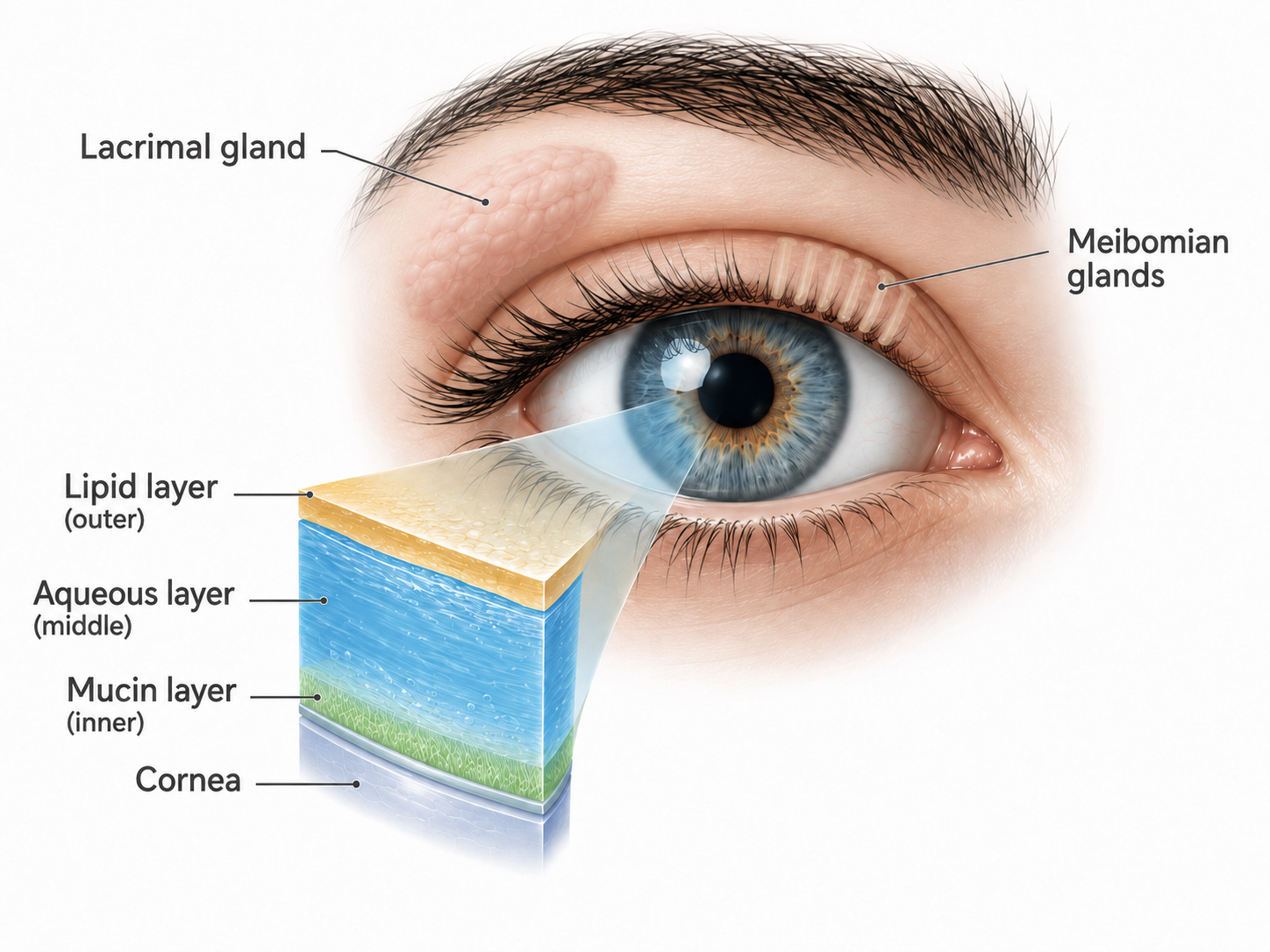
The tear film: A healthy tear film has mucus, watery and oily layers that keep the eye surface comfortable and clear.
The tear film has three main layers:
1. The mucus (or mucin) layer
This is the innermost layer. It helps the tears stick evenly to the surface of the eye.
2. The aqueous layer
This middle layer hydrates the eye surface and contains nutrients and protective proteins.
3. The lipid (or oily) layer
This outer layer is produced by the meibomian glands in the eyelids. It helps prevent the watery layer from evaporating too quickly. If the oily layer is poor, tears evaporate faster. This is one of the most common reasons patients develop dry eye symptoms.
What are blepharitis and meibomian gland dysfunction?
Blepharitis means inflammation of the eyelid margins. It may cause:
crusting around the eyelashes
redness of the eyelid edges
irritation or burning
recurrent styes or chalazia
unstable tear film
dry eye symptoms
Meibomian gland dysfunction, or MGD, is one of the most common forms of blepharitis. The meibomian glands normally produce the oily layer of the tear film. In MGD, the oil can become thick, stagnant or blocked. Instead of flowing easily onto the eye surface, it may remain trapped in the glands. This leads to faster tear evaporation and irritation of the eye surface.
Common symptoms of dry eye and blepharitis
Symptoms vary from person to person. Common symptoms include:
dry or gritty eyes
burning or stinging
watering
redness
tired or heavy eyes
fluctuating blurred vision
sensitivity to light
discomfort with screens or reading
contact lens intolerance
eyelids sticking together in the morning
recurrent styes or eyelid swelling
Many patients find symptoms are worse:
late in the day
during screen work
in air-conditioned rooms
in windy environments
after prolonged reading
during travel or flights
Why dry eye is common in Singapore
Dry eye is particularly common in Singapore because many people spend long hours in:
air-conditioned offices
dry indoor environments
screen-heavy work settings
cars or rooms with fans blowing directly at the face
Screen use is especially important. When we concentrate on a computer, tablet or phone, we blink less often and some of these blinks are ‘partial blinks’ meaning the eyelids do not close completely on every blink. Fewer blinks and partial blinking mean the tear film is not refreshed as regularly, so the eye surface dries out more quickly.
Other causes and risk factors
Dry eye and blepharitis may be associated with:
ageing
hormonal changes
menopause
contact lens wear
previous eye surgery, including cataract surgery or LASIK
rosacea or seborrhoeic dermatitis
allergies
autoimmune conditions such as Sjögren’s syndrome, rheumatoid arthritis or lupus
some medications, including antihistamines, antidepressants and beta-blockers
eye make-up blocking the oil glands
A careful assessment helps identify which factors are most important for each patient.
How dry eye is assessed
Dry eye is not the same in every patient, so treatment should be based on the underlying cause.
Assessment may include:
slit lamp examination of the eye surface and eyelid margins
assessment of the meibomian glands
tear film break-up time
fluorescein staining to show dry patches or surface damage
lissamine green staining in selected cases
Schirmer’s tear testing to measure tear production
meibography to assess meibomian gland structure
tear film analysis, such as IDRA testing
slit lamp photography or videography when useful
blood tests such as anti-ENA antibodies if autoimmune dry eye is suspected
Not every patient needs every test. The aim is to identify the main cause of symptoms and tailor treatment accordingly.
My usual treatment approach:
Dry eye treatment works best when it is stepwise and consistent.
1. Environmental changes
Small changes can make a big difference. These may include:
taking regular screen breaks
using the 20-20-20 rule
avoiding fans or air-conditioning blowing directly at the eyes
positioning screens slightly below eye level
blinking deliberately during prolonged screen use
avoiding very dry or windy environments where possible
The 20-20-20 rule means that every 20 minutes, you look at something 20 feet away for about 20 seconds. This helps relax the eyes and encourages blinking.
2. Nutritional support
For some patients, omega-3 supplementation may be helpful as part of an overall dry eye plan.
This is not a stand-alone cure, but it may support tear film quality in selected patients, particularly those with meibomian gland dysfunction.
3. Warm compresses
Warm compresses can help soften thickened meibomian gland oil and improve oil flow. They are particularly useful for patients with:
meibomian gland dysfunction
thickened gland secretions
recurrent styes or chalazia
evaporative dry eye
However, warm compresses are not necessary for every patient. They work best when the underlying problem is blocked or poor-quality meibomian gland oil.
4. Eyelid cleaning
Some patients also benefit from eyelid cleaning, especially if there is blepharitis, crusting, Demodex, or inflammation around the eyelashes.
This may involve dedicated lid wipes or lid cleaning foam. In selected patients, products containing tea tree oil, such as tea tree oil lid wipes or lid foams, may be used.
The aim is to reduce irritation and inflammation around the eyelid margins.
5. Lubricating eye drops
Artificial tears help stabilise the tear film and reduce irritation. Depending on the severity and pattern of symptoms, treatment may include:
preservative-free lubricating drops
thicker gels
night-time ointments
lipid-containing drops or sprays for evaporative dry eye
Preservative-free drops are often preferred when drops are used frequently or long term.
6. Prescription anti-inflammatory treatment
Some patients need treatment for inflammation, not just lubrication.
This may include:
a short course of a low-potency steroid drop, such as loteprednol
topical ciclosporin in selected patients
oral doxycycline or azithromycin for meibomian gland inflammation or rosacea-related disease
These treatments are chosen based on the examination findings and should be used under medical supervision.
In-clinic treatments for dry eye and blepharitis
For patients with more persistent symptoms, in-clinic treatments may be useful. Depending on the cause, these may include:
Meibomian gland expression
The oil glands are gently expressed at the slit lamp to help clear stagnant or thickened secretions.
Blephasteam-assisted meibomian gland expression
Steam-goggle treatment can help warm the eyelids before meibomian gland expression, making the treatment more effective and comfortable for some patients.
BlephEx microblepharoexfoliation
This treatment helps clean the eyelid margins more thoroughly, particularly in patients with significant blepharitis, Demodex or debris around the lashes.
Rexon-Eye
Rexon-Eye is a non-invasive treatment used for selected patients with dry eye disease. It may be considered when symptoms persist despite standard treatment.
Punctal plugs
Punctal plugs are tiny devices placed in the tear drainage ducts to help keep natural tears on the eye surface for longer. They may be useful in patients with reduced tear production, but they are not suitable for every type of dry eye.
IPL therapy
Intense pulsed light treatment may be considered for selected patients with meibomian gland dysfunction or rosacea-related dry eye.
What patients should expect
Dry eye and blepharitis are usually chronic conditions. This means the goal is often to control the condition, not a permanent one-time cure.
Most patients improve, but treatment needs to be consistent. Symptoms often return if treatment is stopped too early, especially if the underlying problem is meibomian gland dysfunction or blepharitis.
It is also important to understand that improvement may take time. Lubricating drops may help quickly, but eyelid treatments, gland treatments and anti-inflammatory medications often take several weeks to show their full benefit.
Your dry eye home treatment plan
Many patients benefit from a simple daily routine:
reduce direct air-conditioning or fan exposure
take regular screen breaks
use lubricating drops as advised
use warm compresses if recommended
clean the eyelid margins if blepharitis is present
use prescription drops only as directed
return for review if symptoms persist or worsen
A consistent routine is usually more effective than occasional treatment only when symptoms become severe.
When symptoms may be more serious
Dry eye is usually uncomfortable rather than dangerous, but symptoms should not always be assumed to be “just dry eye”. You should seek prompt assessment if you experience:
significant eye pain
marked light sensitivity
sudden reduction in vision
one very red painful eye
contact lens-related pain or redness
discharge
symptoms after eye injury or recent eye surgery
These symptoms may suggest infection, inflammation, corneal disease or another eye problem requiring urgent treatment.
Concerned about dry, gritty, watery or tired eyes?
A detailed eye surface assessment can help identify whether your symptoms are due to dry eye, blepharitis, meibomian gland dysfunction, allergy or another condition.
Treatment can then be tailored to the underlying cause, rather than relying on drops alone.
Book an appointment for a dry eye and blepharitis assessment in Singapore.